
Why Is My Hand Still Swollen Weeks After an Injury or Surgery?
August 18, 2026
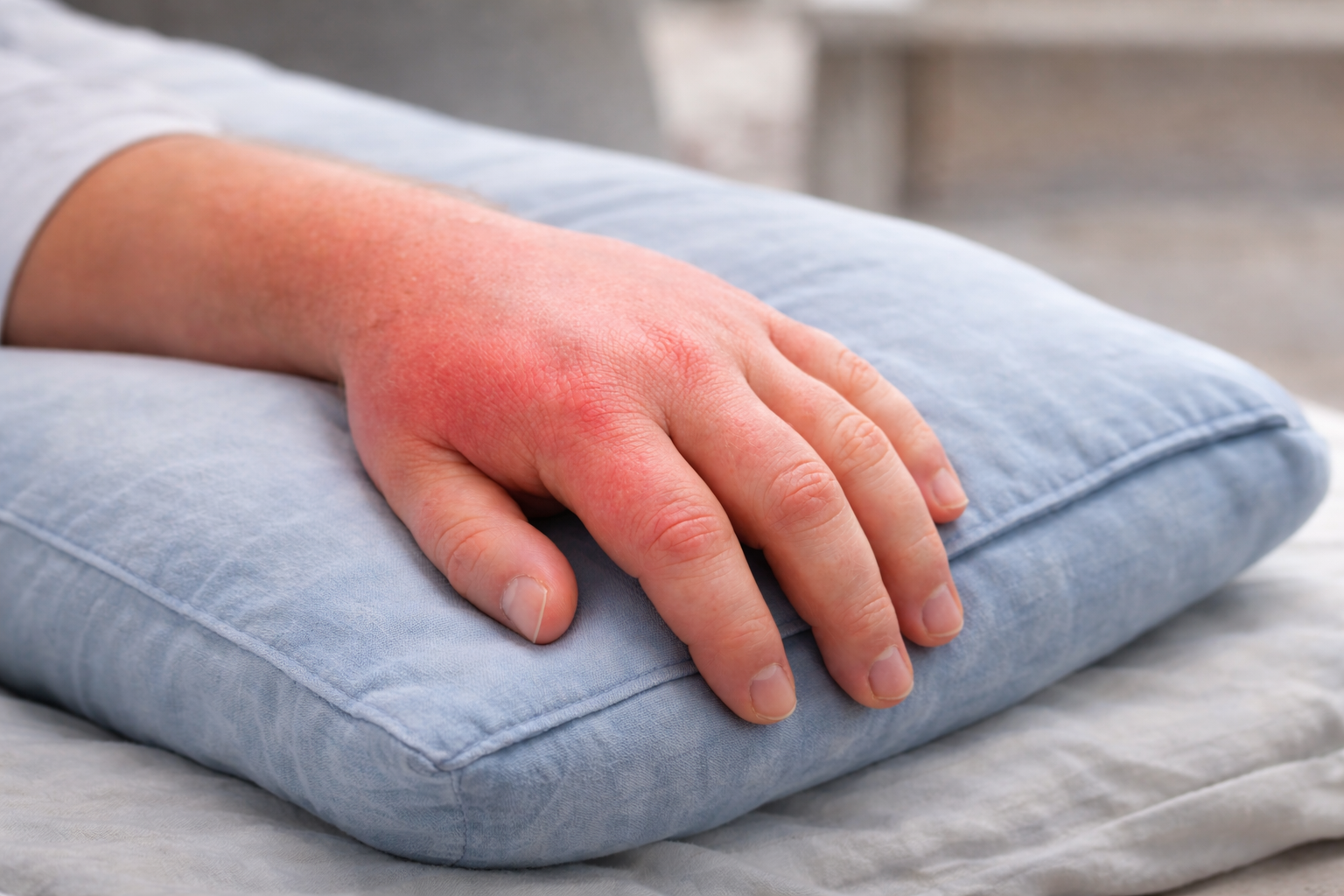
You injured your hand several weeks ago, or perhaps you have recently had surgery. The initial pain may be improving, but your hand still looks swollen. Your fingers might feel puffy, tight, or harder to bend.
It is easy to wonder whether something is wrong.
Swelling is a normal part of healing, and it can last much longer than many people expect. However, ongoing swelling can also affect movement and slow your recovery if it is not managed well.
Understanding why your hand is still swollen can help you know what to expect and when it may be time to get some extra support.
Why does your hand swell after an injury?
When tissue is injured, your body sends extra fluid and cells to the area as part of its natural healing response.
This is why swelling often appears soon after an injury or surgery.
The hands and fingers can be particularly affected because there is not much space for this extra fluid. Even a relatively small amount of swelling can make your fingers feel tight and reduce movement.
Swelling does not always disappear as soon as the initial injury begins to heal. Your body may continue repairing tissue for weeks or months.
Is it normal for swelling to last for weeks?
Some swelling can continue for several weeks after an injury or operation. How long it lasts depends on the type of injury, the surgery you have had, your activity levels, and how well the hand is moving.
You may also notice that swelling changes throughout the day.
Your hand might look better in the morning but become more swollen after activity. For some people, the opposite happens and the hand feels particularly stiff and puffy after waking.
Recovery is different for everyone, so there is no single point when all swelling should have disappeared.
What matters is whether it is gradually improving.
Why can swelling slow down recovery?
Swelling is not simply something you can see. It can change how your hand moves.
Extra fluid around the joints can make bending and straightening the fingers more difficult. This may cause you to use the hand less, which can then contribute to further stiffness.
Over time, you can find yourself in a cycle where swelling limits movement and reduced movement makes it harder for swelling to settle.
This is one reason managing swelling is an important part of hand therapy.
What can help reduce hand swelling?
Movement is often helpful because your muscles assist with moving fluid through the hand and arm. However, the type and amount of movement needs to be appropriate for your stage of healing.
Elevation may also be useful, particularly during the earlier stages of recovery.
Depending on your injury, your hand therapist may recommend compression, specific exercises, positioning, or gentle techniques designed to encourage fluid movement.
The important part is finding the right balance. Doing too little can contribute to stiffness, while doing too much may irritate healing tissue and cause the hand to swell again.
When should ongoing swelling be assessed?
If your swelling is not gradually improving, it is worth discussing it with your healthcare professional.
You should also seek advice if the swelling suddenly becomes worse or is accompanied by increasing pain, redness, heat, wound changes, fever, or other symptoms that concern you.
After surgery, follow the advice provided by your surgical team about symptoms that require urgent assessment.
How hand therapy can help with persistent swelling
A hand therapist can look at more than the swelling itself.
They can assess your movement, stiffness, pain, scar tissue, and how you are using your hand during everyday activities. This helps identify factors that may be contributing to the problem.
Treatment can then be adjusted to your stage of recovery.
The aim is to reduce swelling while helping you regain comfortable movement and function.
Give your hand time to heal
It can be frustrating when your hand still looks or feels swollen weeks after an injury or surgery, particularly when other parts of your recovery seem to be going well.
Healing takes time.
What you want to see is gradual progress. Your hand may not change dramatically from one day to the next, but improvements often become much clearer when you look back over several weeks.
With the right balance of movement, protection, and support, swelling should become easier to manage as your recovery progresses.

