
When to Use Hot or Cold for an Injury: Simple Advice That Helps
December 22, 2025
When pain, swelling, or stiffness shows up after an injury, one of the first questions people ask is: should I use heat or ice? It’s a good question—and the right answer depends on the type and timing of your symptoms.
At Hands for Living, we’re often asked this by people recovering from sprains, repetitive strain, or post-surgical discomfort. Let’s take a look at how both hot and cold therapy can help, and when to use each one.
The Difference Between Hot and Cold Therapy
Both heat and cold can be helpful—but they work in different ways.
- Cold (ice) reduces blood flow, which helps limit swelling and numbs pain.
- Heat increases circulation, helping muscles relax and easing stiffness.
Knowing which one to use—and when—can make a big difference in how quickly you feel better.
When to Use Cold Therapy
Cold therapy is most effective in the early stages of an injury, or when dealing with swelling, inflammation, or sharp pain. It helps slow blood flow to the area, which can reduce bruising, heat, and discomfort.
Use cold therapy when:
- You’ve just had an injury (within the first 48–72 hours)
- There’s visible swelling or bruising
- You’re feeling a sharp, throbbing pain
- You’ve overused a joint and want to calm it down
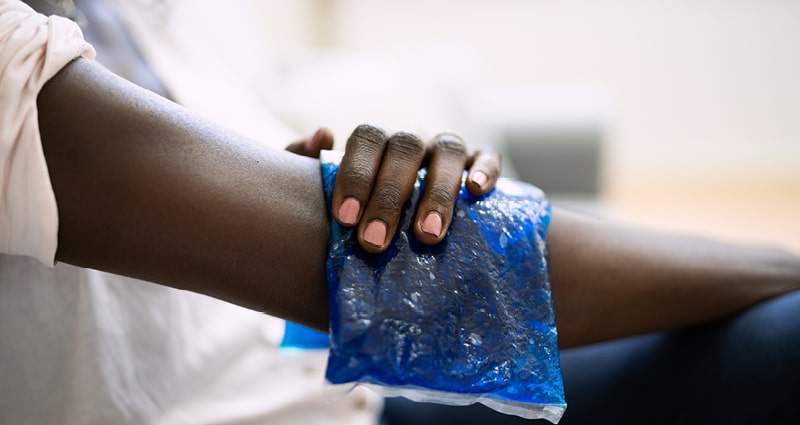
Cold can be applied using an ice pack wrapped in a cloth, a bag of frozen peas, or a gel pack. Always limit cold therapy to 10–15 minutes at a time, and never place ice directly on the skin.
When to Use Heat Therapy
Heat is best for chronic pain, muscle tightness, or stiff joints. It relaxes tissues, improves blood flow, and helps ease the tension that builds up when an area isn’t moving well.
Use heat therapy when:
- You’re feeling general stiffness, especially in the morning
- Your muscles are tight or sore from overuse
- You’re recovering from an older injury and want to improve flexibility
- Pain feels dull, achy, or ongoing
Warm packs, heat wraps, warm water bottles, or a bath can all provide relief. Just be sure the temperature is warm—not hot—and limit sessions to 15–20 minutes.
What About Switching Between the Two?
Some conditions benefit from using both hot and cold at different stages of recovery. For example, you might start with ice after an activity flare-up, and then apply heat the next day to reduce stiffness.
If you’re unsure which to use—or when to switch—your therapist can help guide you based on your specific symptoms and recovery stage.
When to Avoid Heat or Cold
There are times when you should be cautious. Avoid heat if:
- The area is swollen, bruised, or recently injured
- You have poor circulation or numbness in the area
Avoid cold if:
- The joint feels very stiff or is chronically sore
- You have conditions like Raynaud’s disease or extreme cold sensitivity
Always check in with a professional if you’re unsure which approach is safe for you.
How Hand Therapy Can Help You Recover Safely
While hot and cold therapy can help manage symptoms, they’re only part of the picture. At Hands for Living, we work with you to understand the root cause of your pain and create a full plan for healing and recovery.
This might include:
- Gentle guided exercises
- Hands-on therapy to improve movement
- Advice on managing activity levels
- Support with splints or braces if needed
Hot or cold therapy can make you more comfortable—but knowing what’s causing the pain is the key to long-term relief.

