
Swelling Management: How to Reduce Hand, Wrist, and Elbow Swelling After Injury or Surgery
February 10, 2026
Swelling is a natural part of healing after an injury or surgery—but when it lasts too long or becomes excessive, it can slow recovery, cause discomfort, and limit movement. At Hands for Living, managing swelling is often one of the first goals of therapy. With the right approach, swelling can be controlled effectively—helping you heal faster and move more comfortably.
Why Does Swelling Happen?
When the body experiences an injury or surgery, it sends extra fluid and cells to the area to protect and repair tissues. This fluid builds up in the soft tissues, causing swelling (also known as oedema).
In small joints like the fingers or wrist, even a little swelling can cause stiffness or reduced movement. That’s why it’s important to manage it early—before it starts to affect function or comfort.
Signs That Swelling Needs Attention
Mild swelling is normal after injury, but if it doesn’t begin to settle within a few days, or if it gets worse, it may need targeted support. Watch for signs like:
- Ongoing puffiness or fullness in the hand, wrist, or elbow
- Difficulty bending or straightening fingers or joints
- A tight or “stretched” feeling in the skin
- Increased discomfort after activity or at the end of the day
- Rings or jewelry feeling tight
These symptoms don’t always indicate a serious problem—but they do suggest the body needs a little help managing the healing response.
How to Reduce Swelling Safely
Therapists use a combination of simple techniques to encourage fluid to move away from the affected area and return to normal circulation.
1. Elevation
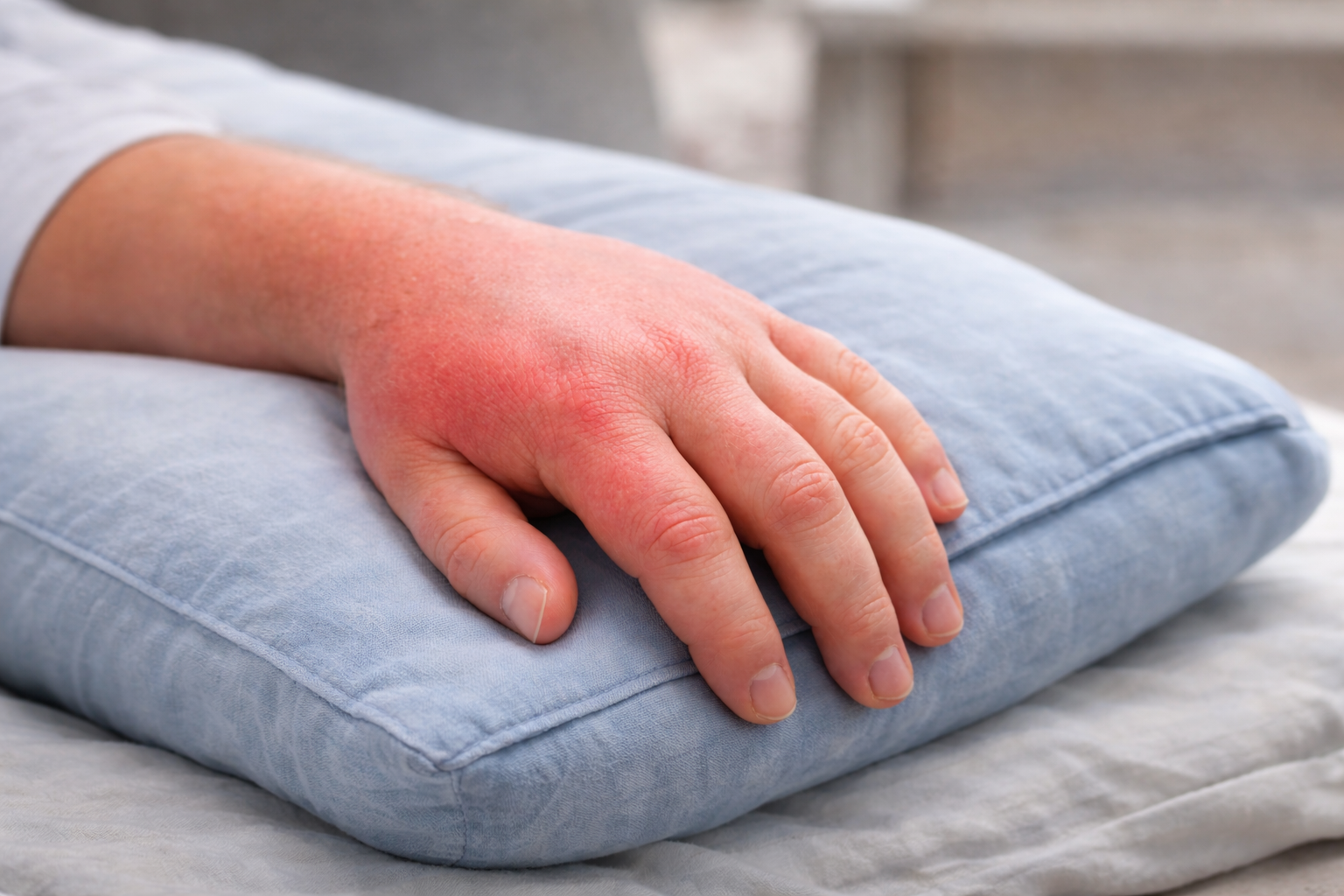
Keeping your arm elevated—ideally above heart level—uses gravity to help drain fluid away from the swollen area. This works well in early recovery or after activity. Try resting your arm on pillows when sitting or lying down, or using a sling in the right position if advised.
2. Gentle Movement
Simple movements such as opening and closing your hand, bending your wrist, or gently rotating your forearm can encourage circulation and prevent fluid from pooling. Even when you’re not ready for exercise, this kind of movement helps keep swelling in check.
3. Compression
Light compression garments or wraps can provide even pressure that helps prevent fluid from building up. These need to be fitted properly—too tight and they can cause more harm than good. Your therapist can help recommend the right product and teach you how to use it safely.
4. Soft Tissue Techniques
Therapists may use gentle massage techniques known as manual edema mobilization to help shift fluid from the hand or arm. This is a targeted, light-touch method—not a deep massage—that helps guide fluid back into the lymphatic and circulatory systems.
5. Cold Therapy (When Appropriate)
In some cases, using a cool compress can help reduce inflammation and swelling, especially in the early days after injury. This should always be used with care, and not when circulation is already reduced.
Why Swelling Management Is Important for Long-Term Recovery
Unmanaged swelling can lead to more than just discomfort. Over time, it can limit range of motion, delay healing, and even contribute to long-term stiffness or tightness in the tissues.
By addressing swelling early, you’re more likely to:
- Regain full movement
- Reduce discomfort more quickly
- Prevent complications like joint stiffness or scar sensitivity
- Resume normal activities sooner
Even if swelling has been present for a while, therapy can often still help reduce it and improve function.
Tailored Support Makes All the Difference
Every person’s recovery is different. At Hands for Living, we assess what’s contributing to your swelling—whether it’s position, movement, or healing stage and develop a personalized plan to reduce it effectively.
Swelling might be a normal part of healing, but that doesn’t mean you have to live with it for longer than necessary. With gentle movement, proper elevation, and guidance from a skilled therapist, you can help your body recover more comfortably and fully.

