
Overuse Injuries in the Elbow: Understanding Tennis Elbow and Golfer’s Elbow
February 24, 2026
The elbow is a joint we rarely think about—until it starts to hurt. Whether you play sport, work with tools, or spend long hours at a desk, overuse of the elbow can gradually lead to pain and loss of function.
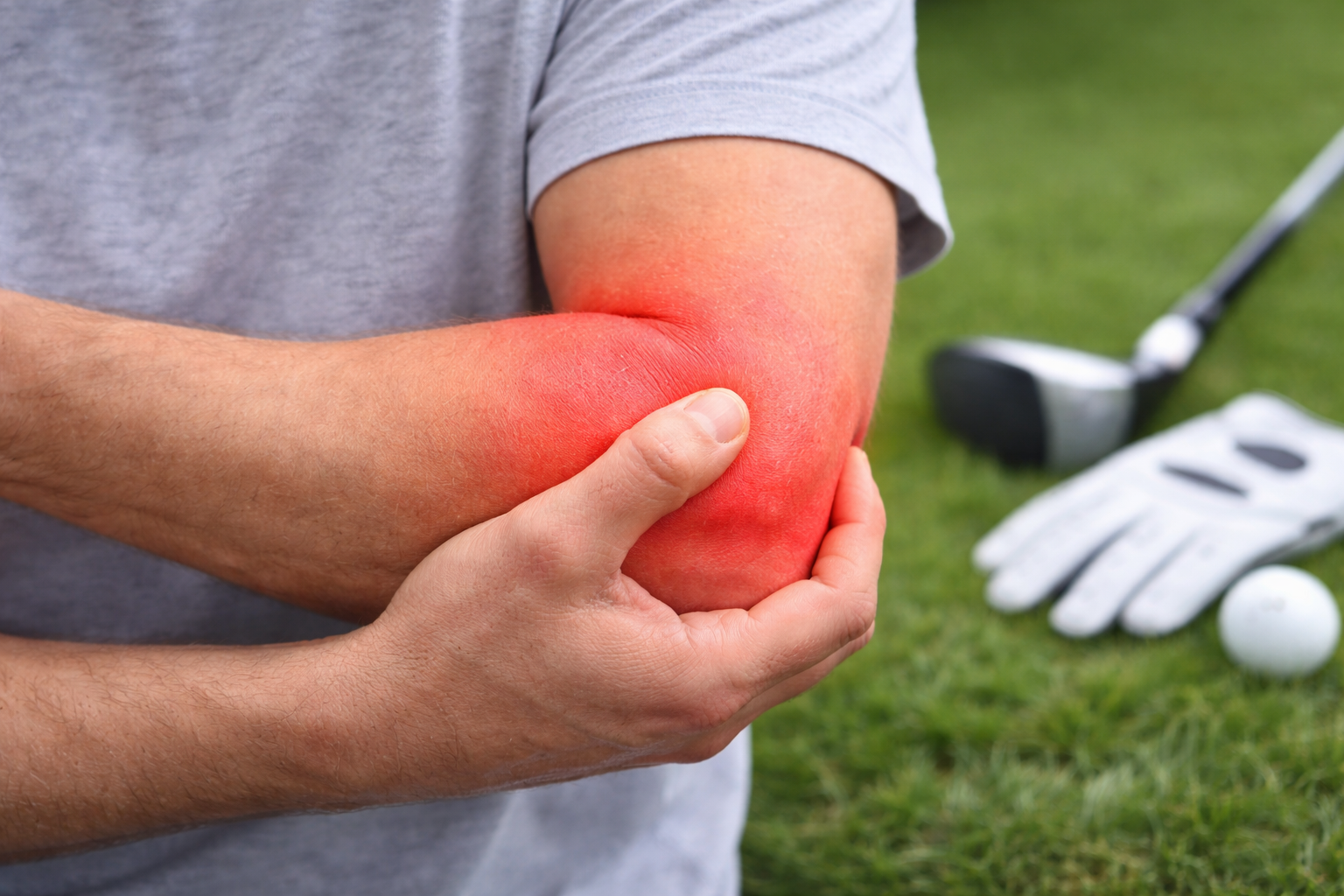
Two of the most common elbow overuse conditions are tennis elbow and golfer’s elbow. Despite the names, you don’t need to be an athlete to develop them. They affect people of all ages, often as a result of repetitive movement, poor technique, or long hours doing the same task.
Understanding the difference—and getting the right support early—can make all the difference in recovery.
What Causes Overuse Injuries in the Elbow?
The elbow is surrounded by tendons that anchor muscles used for gripping, lifting, and rotating the arm. Repeating the same motion again and again—especially with force or awkward positioning—can irritate these tendons. Over time, this strain creates tiny tears in the tissue, which leads to pain and weakness.
These injuries often develop gradually. What starts as a mild ache can progress to sharp pain, particularly during specific tasks like lifting a kettle, opening a door, or holding a phone.
Tennis Elbow vs Golfer’s Elbow: What’s the Difference?
Although both are tendon overuse injuries, they affect different areas of the elbow:
- Tennis Elbow (Lateral Epicondylitis):
Pain appears on the outside of the elbow, often spreading into the forearm. It’s linked to overuse of the wrist extensor muscles—those that straighten your wrist or lift your hand. - Golfer’s Elbow (Medial Epicondylitis):
Pain is felt on the inside of the elbow, near where the wrist flexor muscles attach. These are the muscles you use to grip, twist, and bend your wrist.
Despite their names, these injuries are commonly seen in people who type, lift, garden, cook, or work with tools—not just in sport.
Common Signs and Symptoms
- Pain when gripping or lifting objects
- Discomfort when turning a doorknob or shaking hands
- Tenderness at the inside or outside of the elbow
- Forearm fatigue or weakness
- Stiffness first thing in the morning
Pain may improve with rest at first, but can return quickly when activity resumes.
Why Early Support Matters
Overuse injuries tend not to resolve fully without changes to movement or workload. Rest may help short term, but long-term recovery often needs guided support.
At Hands for Living, we assess how the elbow is functioning and what movements are contributing to strain. We then create a personalized therapy plan to reduce pain and restore strength.
How Hand Therapy Can Help
Your therapy plan may include:
- Manual treatment to release tension and improve tissue healing
- Targeted exercises to build tendon tolerance and prevent re-injury
- Splinting or taping for temporary relief if the pain is interfering with work
- Activity modifications to avoid repeated overload
- Education on lifting technique, posture, and pacing for prevention
The goal is not only to treat the symptoms, but also to build resilience so you can return to your normal activities without pain.
Recovery Is Possible
With the right support, elbow overuse injuries typically improve well. The key is recognising the signs early and addressing the root cause—whether it’s workload, technique, or tendon sensitivity.
If your elbow is stopping you from doing the things you enjoy—or need to do—know that help is available.

