
Rehabilitation After Shoulder Surgery: How Therapy Supports Your Recovery
March 10, 2026
Shoulder surgery is a big step—often taken after months of pain or limited movement. Whether it’s for a rotator cuff repair, joint stabilisation, or shoulder replacement, surgery aims to restore function. But recovery doesn’t end in the operating room.
At Hands for Living, we support patients through every stage of their shoulder surgery recovery—especially when the arm, hand, or wrist are also affected. Many people are surprised to learn how closely these areas are linked, and how therapy for the whole limb supports better outcomes.
Why Recovery After Shoulder Surgery Is Complex
The shoulder is a highly mobile joint that affects how you use your entire arm. After surgery, it’s normal to experience:
- Pain or discomfort
- Swelling and stiffness
- Muscle weakness
- Changes in hand or wrist use due to reduced shoulder movement
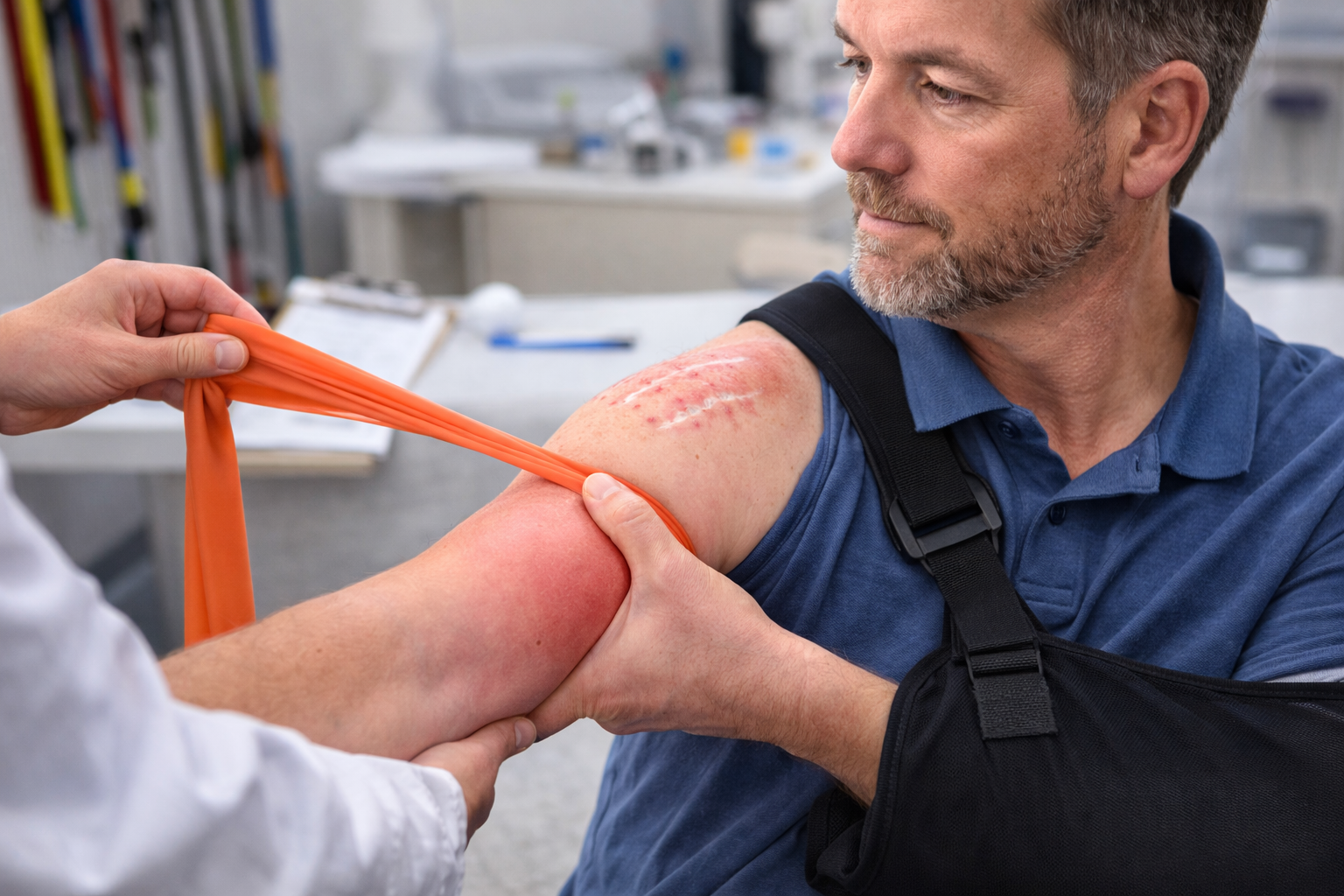
In many cases, your shoulder may need to be protected in a sling or limited in movement for several weeks. During this time, the hand and elbow can become stiff and uncomfortable if not addressed.
What Therapy Looks Like After Surgery
Therapy helps manage symptoms, support healing, and keep your recovery on track—without putting stress on the surgical site. In the early stages, therapy focuses on:
- Preventing stiffness in the hand, wrist, and elbow
- Managing swelling and circulation
- Supporting comfort while in a sling
- Teaching gentle movements that are safe and allowed during healing
As recovery progresses, therapy shifts to:
- Restoring strength and coordination through the whole upper limb
- Rebuilding movement patterns like reaching, lifting, or carrying
- Addressing compensations or habits that developed while protecting the shoulder
We work closely with your surgical team to follow any restrictions, ensuring every step is safe and appropriate.
Why Therapy for the Hand and Wrist Matters
After shoulder surgery, many people unknowingly adjust how they use their hand or wrist—leading to secondary issues like:
- Wrist pain from overcompensating
- Swelling in the hand from reduced movement
- Grip weakness from limited use
By supporting the whole arm during recovery, we help avoid these setbacks—and support a smoother return to daily activities.
Helping You Get Back to What You Love
Recovery after shoulder surgery takes time, but you don’t have to do it alone. With the right support, most people regain the comfort, strength, and control they need to return to work, hobbies, or daily routines.
We’re here to help guide that process—step by step, and arm by arm.

